Baddest Adaptive On The Beach
DO YOU HAVE WHAT IT TAKES TO PROVE YOU ARE THE...
BADDEST ON THE BEACH?
Welcome to the 4th Annual Clearwater Classic: Baddest on the Beach — Adaptive Strongman Competition!
The Clearwater Classic has always been built around the idea that strength belongs to everyone. As the event has grown into a full-scale Strength & Fitness Expo, we're proud to continue expanding opportunities for adaptive athletes to compete, challenge themselves, and showcase just how powerful the adaptive strength community truly is.
For 2027, Adaptive Strongman will have its own dedicated competition, featuring expanded adaptive divisions and events designed to provide athletes with a competitive, exciting, and unforgettable experience.
Whether you're an experienced adaptive strength athlete or you're looking to step onto a Strongman competition field for the first time, this is your opportunity to compete on Clearwater Beach and prove that strength has no limits.
ADAPTIVE STRONGMAN COMPETITION
Saturday, February 6th, 2027
The overall Clearwater Classic Strength & Fitness Expo will run:
Saturday & Sunday, February 6th–7th, 2027
📍 Pier 60 Park — Clearwater Beach, Florida
Athletes will compete outdoors at one of Florida's most recognizable beach destinations, surrounded by spectators, vendors, fellow athletes, multiple strength and fitness sports, entertainment, and the energy of the entire Clearwater Classic weekend.
Like & Follow for up-to-date information!
Dutch American Strength LLC Facebook Business Page
Dutch American Strength LLC Instagram Business Page
TRAVEL INFORMATION
✈️ Tampa International Airport (TPA)
20.2 miles from Clearwater Beach
✈️ St. Petersburg-Clearwater International Airport (PIE)
12.3 miles from Clearwater Beach
✈️ Sarasota Bradenton International Airport (SRQ)
55.3 miles from Clearwater Beach
THE DESTINATION
The Clearwater Classic returns to Pier 60 Park in beautiful Clearwater Beach, Florida.
Clearwater Beach provides a setting unlike the typical indoor strength competition. Adaptive athletes have the opportunity to compete in front of the Gulf while making the weekend an experience for themselves, their families, friends, and supporters.
Where else can you:
💪 Compete in Adaptive Strongman
🌊 Watch the waves crash behind the competition field
🏖️ Turn competition weekend into a beach vacation
🍽️ Experience the restaurants and attractions of Clearwater Beach
🤝 Meet adaptive and strength athletes from around the country
🏆 Be part of a massive Strength & Fitness Expo
🌅 Finish the day with a Clearwater Beach sunset
All in the same weekend?
This isn't just a competition.
It's an experience.
HOTEL INFORMATION
COMING SOON
WEIGH-INS / ATHLETE CHECK-IN
📍 UFC GYM LARGO
1111 Missouri Ave N
Largo, FL 33770
Friday, February 5th, 2027
8:00 AM–11:00 AM
5:00 PM–8:00 PM
ADAPTIVE STRONGMAN
Clearwater Classic is committed to creating a legitimate competitive platform for adaptive athletes, with expanded divisions designed to accommodate different adaptive classifications and abilities.
Our goal is simple:
Create challenging Strongman events. Provide appropriate adaptations where necessary. Give adaptive athletes a stage worthy of their abilities.
This competition is about strength, resilience, competition, community, and showing exactly what adaptive athletes are capable of.
STRENGTH. RESILIENCE. NO LIMITS.
ONE COMMUNITY.
🔱 Clearwater Classic IV: Baddest on the Beach
📅 February 6th, 2027
📍 Pier 60 Park | Clearwater Beach, Florida
Adaptive division details, events, rules, and additional competition information will be announced as they are finalized.
Event Organizer
Women
Athletes who are paralyzed from the waist down and above-the-knee amputees.
Athletes with spina bifida, cerebral palsy, or other similar diagnoses.
Athletes with spina bifida, cerebral palsy, or other similar diagnoses.
Athletes who have a below-the-knee amputation or other below-the-knee disability.
Athletes with an upper body amputation (arm) or other upper body disability.
Men
Athletes who are paralyzed from the waist down and above-the-knee amputees.
Athletes with spina bifida, cerebral palsy, or other similar diagnoses.
Athletes with spina bifida, cerebral palsy, or other similar diagnoses.
Athletes with an upper body amputation (arm) or other upper body disability.
Athletes who have a below-the-knee amputation or other below-the-knee disability.
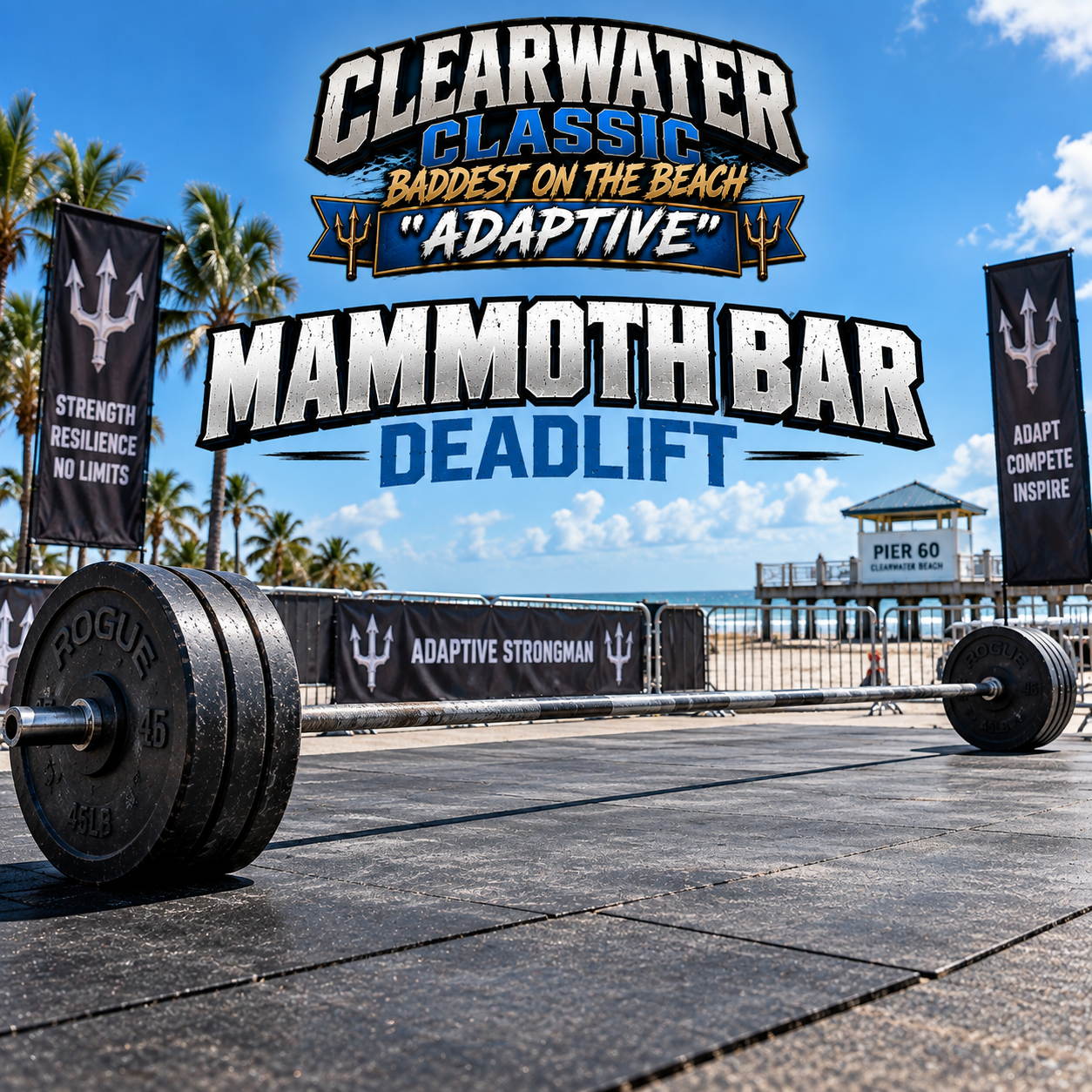
Mammoth Bar Deadlift
Mammoth Bar Deadlift for Reps
Athlete will deadlift a 10-foot Mammoth Bar from the floor.
60-second time limit.
Athlete will perform as many successful repetitions as possible.
Each repetition must reach a clear lockout position appropriate to the athlete’s adaptive classification and physical capabilities.
Athlete must demonstrate control at lockout and wait for the judge’s “DOWN” command.
Hitching and ramping are allowed.
Straps are allowed, including figure-8 straps.
Upper-limb adaptive athletes: An approved prosthetic, cuff, strap, hook, or other adaptive attachment may be used to connect the athlete to the bar.
Athletes with only one functional upper limb may perform the deadlift one-handed or use an approved adaptive attachment on the affected side.
Lower-limb adaptive athletes: Prosthetic limbs may be used. Stance and foot positioning may be modified based on the athlete’s individual needs.
Athletes unable to achieve a traditional standing lockout because of their disability will have an individualized lockout standard established with the head judge before competition.
Neurological adaptive athletes: Reasonable modifications to stance, balance requirements, body positioning, or lockout criteria may be approved when necessary.
Adaptive equipment must be approved by the promoter/head judge before competition.
Adaptations are intended to accommodate the athlete’s disability and may not provide additional mechanical assistance beyond what is reasonably necessary to perform the event.
Belts, knee sleeves, and chalk are allowed.
No deadlift suits.
No tacky or sticky grip-enhancing substances other than chalk.
Bar must be returned to the ground under reasonable control.
Only repetitions receiving the judge’s DOWN command will count.
Most successful repetitions within 60 seconds wins.
Judge’s decision is final.
Universal Adaptive Rule: Reasonable modifications may be made based on an athlete’s individual adaptive needs. All modifications must be approved before competition and will preserve the intended challenge of the Mammoth Bar Deadlift as closely as reasonably possible.
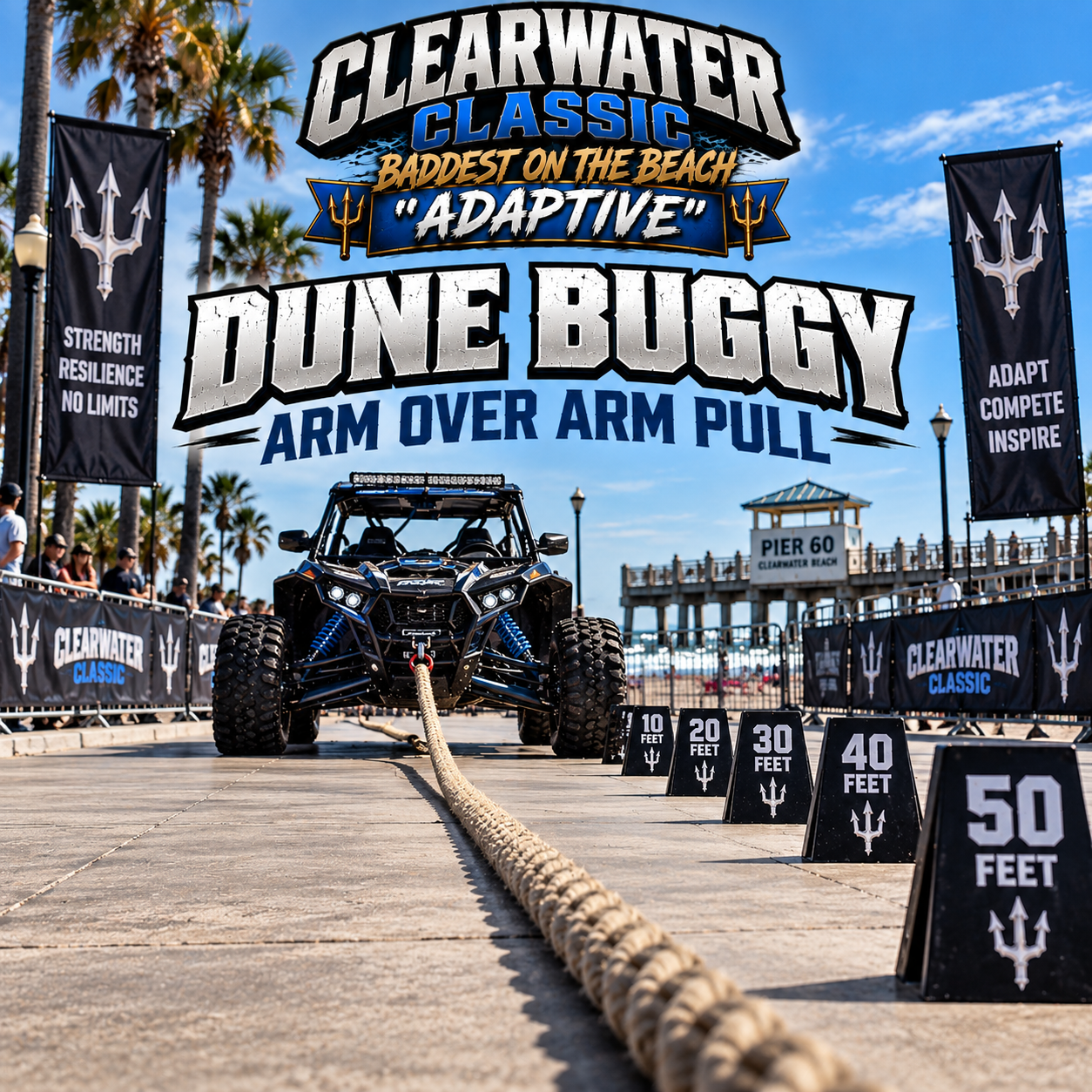
Dune Buggy Arm Over Arm Pull
Athlete will pull a full size Dune Buggy over a distance for fastest time.
Athlete will pull a full-size dune buggy using a 50-foot rope on a concrete surface.
60-second time limit.
On the judge’s “GO” command, the athlete may begin pulling.
Standard execution is a seated, hand-over-hand rope pull.
Upper-limb adaptive athletes: One-arm pulling is permitted. An approved prosthetic, cuff, strap, or adaptive attachment may be used to secure the rope when necessary.
Lower-limb adaptive athletes: Athlete may compete seated, from a wheelchair, or from another approved stable position, depending on the athlete’s needs.
Wheelchairs may be secured/anchored to prevent unwanted movement during the pull.
Athletes with prosthetic lower limbs may use their prosthesis for bracing if desired.
Athletes unable to brace with their legs may use an approved backstop, footplate, or anchoring system.
Adaptive equipment must be approved by the promoter/head judge before competition.
Adaptations are intended to provide a safe means of performing the event and may not provide mechanical assistance beyond accommodating the athlete’s disability.
Gloves, chalk, and belts are allowed.
No tacky or sticky grip-enhancing substances.
Fastest athlete to pull the dune buggy across the finish line wins.
If the course is not completed within 60 seconds, furthest distance wins.
Judge’s decision is final.
Universal Adaptive Rule: Reasonable modifications may be made based on an athlete’s individual adaptive needs. All modifications must be approved before competition and will preserve the intended challenge of the Dune Buggy Arm-Over-Arm Pull as closely as reasonably possible.
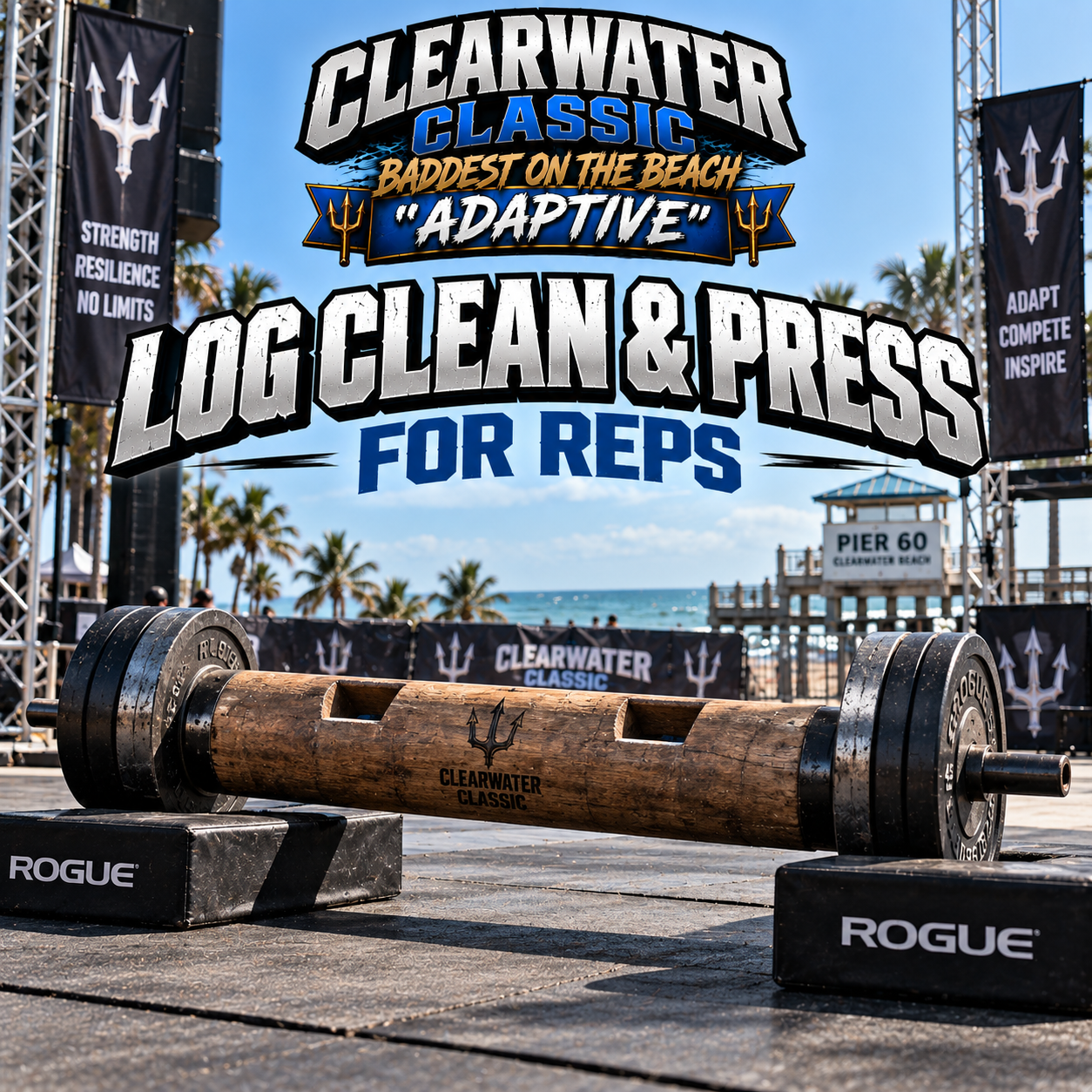
Log Clean & Press for Reps
A single log with set weight for maximum reps in a time limit.
Athlete will clean and press the log from the ground for as many successful repetitions as possible.
60-second time limit.
Each repetition begins with the log on the ground/crash pads.
Athlete must clean the log to the chest/shoulders before pressing overhead.
One clean per repetition unless otherwise specified.
Push press, push jerk, split jerk, and strict press are allowed.
A successful repetition requires a clear overhead lockout appropriate to the athlete’s adaptive classification and physical capabilities.
Athlete must demonstrate control of the log and wait for the judge’s “DOWN” command.
Upper-limb adaptive athletes: An approved prosthetic, cuff, strap, or adaptive attachment may be used when necessary.
Athletes with one functional upper limb may use an approved one-arm pressing technique or event modification, established before competition.
Lower-limb adaptive athletes: Prosthetic limbs may be used, and stance/foot positioning may be modified as necessary.
Athletes competing from a wheelchair or seated position may perform an approved seated variation of the event. The wheelchair or seat may be secured for stability and safety.
Athletes unable to perform a traditional standing overhead lockout will have an individualized lockout standard established with the head judge before competition.
Neurological adaptive athletes: Reasonable modifications to stance, balance requirements, positioning, or lockout criteria may be approved.
Adaptive equipment and modifications must be approved by the promoter/head judge before competition.
Adaptations may accommodate the athlete’s disability but may not provide unnecessary mechanical assistance.
Belts, wrist wraps, elbow sleeves, knee sleeves, and chalk are allowed.
No tacky or sticky grip-enhancing substances.
Athlete must maintain reasonable control when returning the log to the crash pads.
Only repetitions receiving the judge’s DOWN command will count.
Most successful repetitions within 60 seconds wins.
Judge’s decision is final.
Universal Adaptive Rule: Reasonable modifications may be made based on an athlete’s individual adaptive needs. All modifications must be approved before competition and will preserve the intended challenge of the Log Clean & Press as closely as reasonably possible.
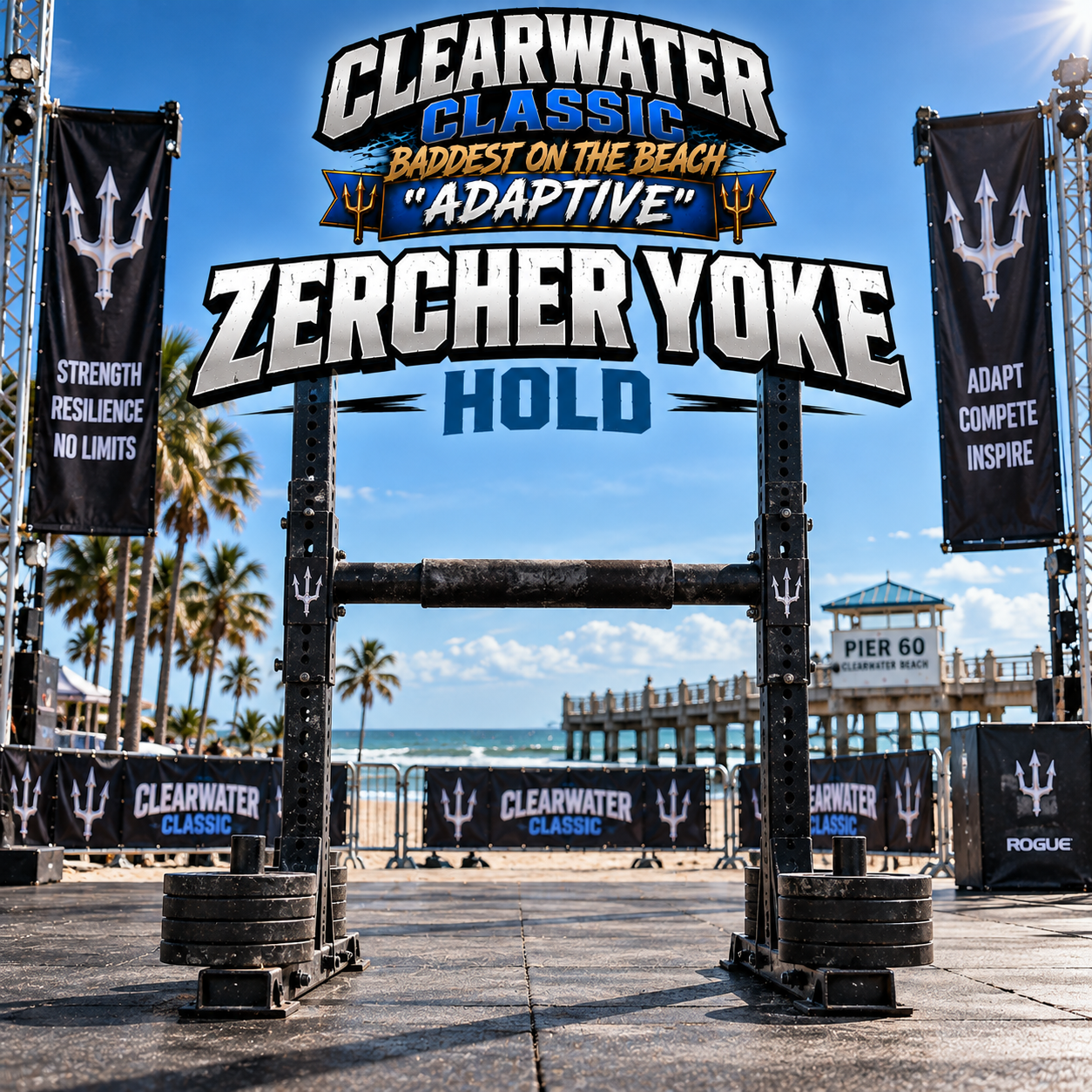
Zercher Yoke Hold
Zercher hold for max time with a Yoke.
Athlete will support a Strongman yoke in the Zercher position for maximum time.
Yoke will be positioned across the inside of the elbows/forearms, with the arms securing the implement in front of the body.
Time begins once the yoke is fully supported by the athlete and clear of the ground.
Longest successful hold wins.
Athlete may adjust their arm and hand position during the hold as long as the yoke remains supported.
Upper-limb adaptive athletes: An approved prosthetic, cuff, strap, sling, or adaptive attachment may be used to help establish a secure Zercher position.
Athletes with one functional upper limb may use an approved modified Zercher position appropriate to their anatomy.
Lower-limb adaptive athletes: Prosthetic limbs may be used and stance/foot positioning may be modified as necessary.
Athletes who compete from a wheelchair or seated position may perform an approved seated variation. The wheelchair or seat may be secured for stability and safety.
For seated athletes, the yoke height and starting position may be adjusted to accommodate the athlete’s functional range.
Athletes unable to maintain a traditional standing posture because of their disability will have an individualized competition position established with the head judge before competition.
Neurological adaptive athletes: Reasonable modifications to stance, balance requirements, positioning, or stabilization may be approved.
Belts, elbow sleeves, wrist wraps, knee sleeves, and chalk are allowed.
No tacky or sticky grip-enhancing substances.
Adaptive equipment and modifications must be approved by the promoter/head judge before competition.
Adaptations may accommodate the athlete’s disability but may not provide unnecessary mechanical assistance.
Time stops when the yoke contacts the ground, the athlete releases the implement, or the judge determines the required competition position has been lost.
Judge’s decision is final.
Universal Adaptive Rule: Reasonable modifications may be made based on an athlete’s individual adaptive needs. All modifications must be approved before competition and will preserve the intended challenge of the Zercher Yoke Hold as closely as reasonably possible.
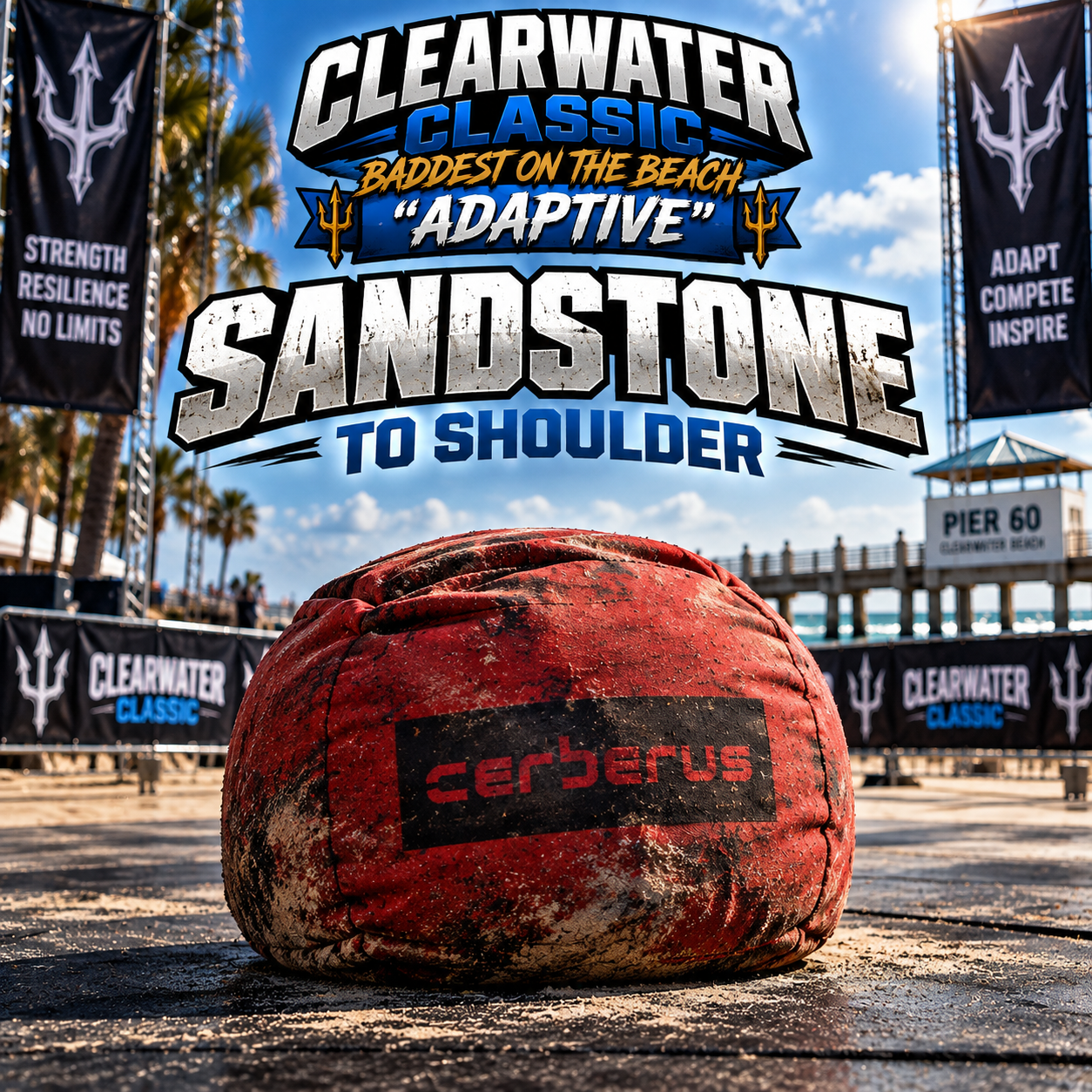
Sand Stone to Shoulder
Shoulder Cerberus Strength Sand-stone Sandbag to Shoulder
Athlete will lift a Cerberus Sandstone sandbag from the ground to the shoulder for as many successful repetitions as possible.
60-second time limit.
Each repetition begins with the sandbag on the ground.
Athlete may use any reasonable technique to bring the sandbag from the ground to the shoulder.
Lapping is allowed.
The sandbag may be shouldered on either side of the body.
A successful repetition requires the sandbag to be clearly supported on the shoulder, with the athlete demonstrating control.
Athlete must wait for the judge’s “DOWN” command before returning the sandbag to the ground.
Upper-limb adaptive athletes: Athletes may use an approved prosthetic, cuff, strap, or adaptive attachment when necessary to grip or control the sandbag.
Athletes with one functional upper limb may use a modified lifting and shouldering technique appropriate to their anatomy and functional ability.
Lower-limb adaptive athletes: Prosthetic limbs may be used, and stance, foot positioning, and lifting technique may be modified as necessary.
Athletes competing from a wheelchair or seated position may perform an approved seated variation. The wheelchair or seat may be secured for stability and safety.
For seated athletes, the required finishing position may be modified from a traditional standing shoulder position to a controlled shoulder position appropriate to the athlete’s functional range.
Neurological adaptive athletes: Reasonable modifications to balance requirements, body positioning, starting position, or finishing position may be approved.
Adaptive equipment and modifications must be approved by the promoter/head judge before competition.
Belts, knee sleeves, elbow sleeves, wrist wraps, grip shirts, and chalk are allowed.
Tacky is not allowed.
Athlete must return the sandbag to the designated area before beginning the next repetition.
Only repetitions receiving the judge’s DOWN command will count.
Most successful repetitions within 60 seconds wins.
Judge’s decision is final.
Universal Adaptive Rule: Reasonable modifications may be made based on an athlete’s individual adaptive needs. All modifications must be approved before competition and will preserve the intended challenge of the Sandstone to Shoulder as closely as reasonably possible.
Feb 6, 2027
Saturday
Pier 60 Park
Pier 60 Park, Causeway Blvd, Clearwater Beach, FL 33767, USA